

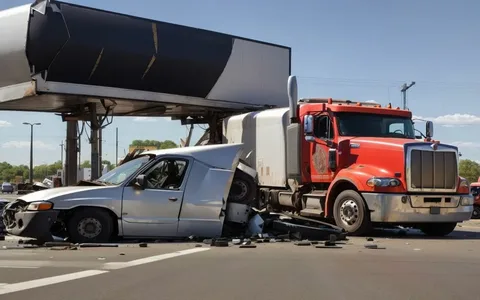
Driving down a busy American highway, it is hard not to feel intimidated by the sheer size of the semi-trucks cruising alongside you. While many assume a collision with these giants is just an intense version of a car wreck, the legal reality is vastly different. From the moment of impact, a complex web of state and federal laws begins to dictate the long road ahead for everyone involved.
The stakes are incredibly high because the physical damage is usually far more severe than what you see in a standard passenger vehicle accident. Since injuries are often life-altering, the financial compensation required to cover medical bills and lost wages tends to be much larger. Navigating this process requires understanding why these settlements reach such high figures and why the path to recovery is so complicated.
Evaluating the Impact of Catastrophic Physical Injuries
The high value of these settlements is largely due to the simple physics of the crash. A fully loaded commercial truck can weigh up to 80,000 pounds, which is roughly twenty times heavier than the average sedan. When that much mass hits a smaller vehicle, the resulting injuries are rarely minor and often involve life-altering trauma like spinal cord damage.
Since these injuries require long-term care, the case value must account for decades of future medical expenses. A lawyer isn’t just looking at the initial hospital bills from the emergency room stay. They are calculating the total cost of future surgeries, therapy, and the home modifications a victim might need to live a normal life.
Navigating the Web of Multiple Liable Parties
In a regular car accident, you are usually just dealing with the other driver and their insurance company. However, a trucking accident can involve a long list of people and companies that might all share the blame. This could include the driver, the fleet owner, the mechanics who worked on the brakes, or even the warehouse crew that loaded the trailer.
For example, a firm like Naji Injury Law might investigate if the trucking company pushed the driver to work more hours than the law allows. If the freight was loaded unevenly, causing the truck to tip, the loading company might be held responsible as well. This “finger-pointing” between different companies is one of the main reasons these cases take much longer to resolve than a simple fender-bender.
Uncovering Evidence Within Federal Safety Regulations
Commercial trucking is a highly regulated industry governed by the Federal Motor Carrier Safety Administration (FMCSA). These rules cover everything from driver hours to how often the engine must be inspected for safety. When a crash occurs, attorneys must comb through mountains of digital logs and “black box” recorders to see which specific rules were broken.
These electronic logging devices act as the airplane flight recorders of the highway. They track the truck’s speed, when the driver hit the brakes, and whether they skipped mandatory sleep breaks. Proving a company ignored these standards often leads to higher settlements because it shows a pattern of negligence rather than a one-time mistake.
Dealing with Massive Corporate Insurance Policies
Most individual drivers carry insurance policies that top out at a few hundred thousand dollars. Commercial trucking companies, however, are required by law to carry policies worth millions. While this means more compensation may be available, it also means insurers will fight much harder to avoid paying out.
These companies often send specialized “rapid response” teams to accident scenes within hours to gather favorable evidence. They are skilled at shifting blame or pushing victims to accept low settlements before the full extent of injuries is known. With so much money involved, the process often turns into a high-stakes legal battle between the victim and corporate insurers.
Calculating the Long-Term Loss of Income
When a person is involved in a catastrophic truck wreck, their ability to earn a living is often cut short or ended entirely. If a victim had twenty more years of their career left, the settlement must reflect the total amount of money they would have earned in that time. This includes not just their base salary, but also the loss of health benefits, retirement contributions, and potential promotions they will now miss.
Calculating these numbers requires the help of economic experts who can project inflation and wage growth over several decades. It is not enough to just say someone “can’t work”; the legal team must prove exactly how much that loss will cost the family over a lifetime. This meticulous attention to detail is why these settlements often reach seven or eight figures, ensuring the family is protected financially even if the breadwinner can no longer work.
Conclusion
A truck accident is a life-changing event that brings with it a mountain of legal and financial stress. The reason these settlements are so much higher than car accidents is a direct reflection of the massive physical and economic toll they take on victims.
While the complexity of dealing with federal laws and multiple corporations can be overwhelming, understanding these factors is the key to securing a fair future. By staying informed and patient, victims can navigate this difficult process and ensure they receive the resources they need to truly recover and move forward.
