

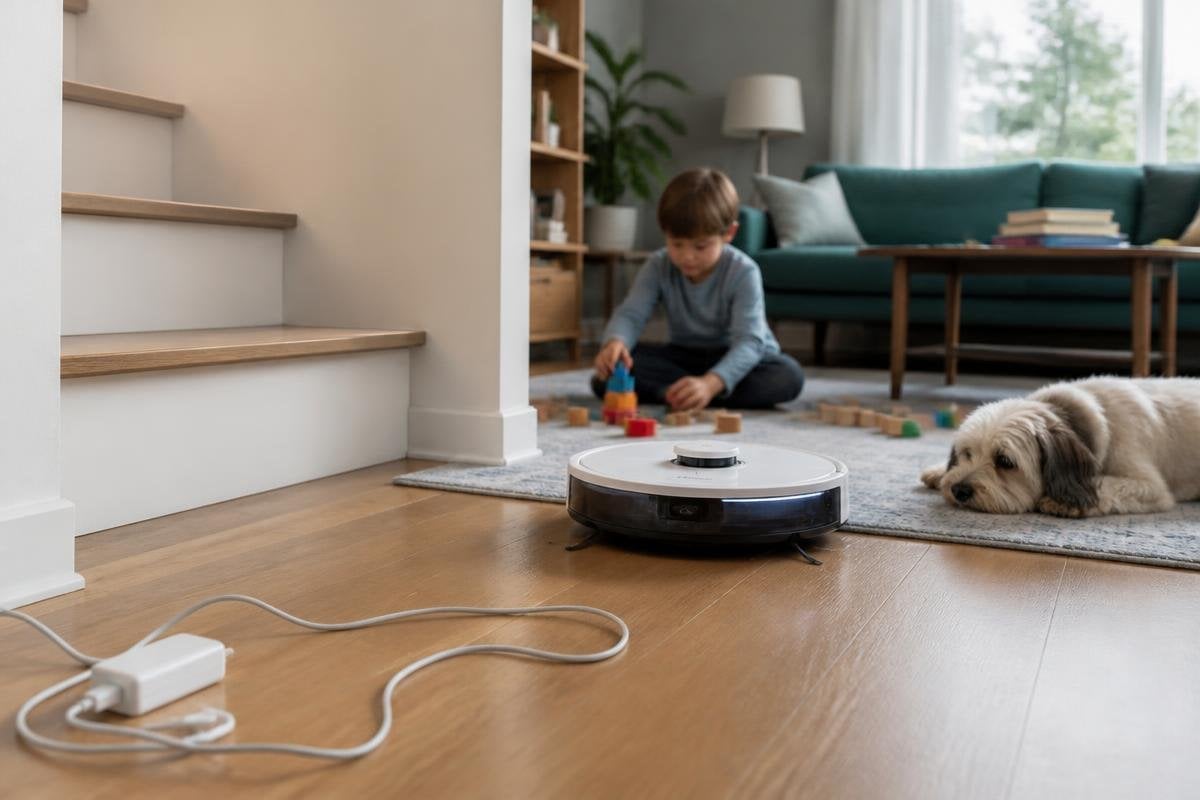
A robot that moves through your home can reach stairs, pets, children, power cables, and human hands. Yet buyers often have no clear way to know how a product behaves when its sensors fail or its software loses track of the room.
- Safety checks should happen before sale, not after injuries or recalls.
- Tests should cover movement, batteries, remote access, and software failure.
- Buyers need a plain safety label that shows what a robot has passed.
Why home robots need a common test
Consumer robots work near people without a trained operator standing beside them. Floor robots can block a walkway, lawn mowers can meet a child or pet, and home robots with cameras can expose private rooms if account security fails.
The risk changes with the robot, so one test cannot cover every product. A moving robot needs checks for force, speed, braking, and safe behavior near edges. Models with a gripper need limits on pinch force and motor movement. Internet-connected models need checks for remote control and access to stored images.
Mandatory testing would give makers a clear starting point. It would also give buyers a way to compare a $300 floor robot with a larger machine that can carry objects or climb stairs.
What the testing should cover
The test should begin with the robot working as the maker says it should. Then the lab should create faults that a buyer may meet at home. The robot should stop, slow down, or enter a safe state when its sensors give bad data.
A useful test plan could require these checks:
- Movement: Measure speed, stopping distance, force at the body and tool, and behavior near stairs.
- Power: Test battery heat, charging faults, damaged cables, and shutdown after a blocked motor.
- Human contact: Check pinch points, sharp edges, noise, and what happens when a person grabs the robot.
- Software faults: Remove the network, send poor sensor data, restart the robot, and test recovery.
- Remote access: Check account security, camera access, location data, and controls from outside the home.
- Labels: State the tested speed, mass, operating area, battery type, and known limits in plain language.
The lab should record the robot’s state before and after each fault.
“The robot stopped” is too vague. A useful report would say that it stopped within a measured distance, stayed off for a set time, or needed a manual reset.
Safety rules need evidence tied to a named machine, test setting, and result. Consumer robot reporting from Robot24.com can put those details beside claims about stopping and remote access. The record should stay tied to the machine as its software changes.
A pass before sale cannot cover every later software update. Makers should repeat safety checks after changes to navigation, motor control, remote access, or battery charging. The test record should name the software version, hardware version, and date.
The rule should also cover reports from homes. If a maker receives repeated reports of a robot moving after an emergency stop, that maker should investigate and report the fault. A safety test has limited value if a known failure stays hidden from buyers.
Small makers may worry about lab fees and delays. That concern deserves a practical answer: use risk levels. A toy with limited movement could face a shorter test, while a lawn mower or robot with a strong arm would need more checks before sale.
I support mandatory safety testing for consumer robots because these machines act in shared spaces, and buyers cannot inspect their control software or motor limits.
A buying check for today
Until clear rules exist, check the product page and manual for specific safety details. If the maker gives only broad claims, treat that as missing information rather than proof that the robot is safe.
Use this checklist before buying:
- Find the emergency-stop method and test whether you can reach it quickly.
- Check the robot’s mass, speed, battery type, and charging instructions.
- Look for limits around stairs, water, pets, children, and loose cables.
- Check whether the robot keeps camera images or location data.
- Read the software-update policy and the process for reporting a fault.
A mandatory label should eventually answer those questions before payment. Until then, the safest choice is the robot whose maker gives measured limits, clear fault behavior, and a dated record of the tests it has passed.
