

Fast fashion gets a lot of bad press, and rightly so. But “fast furniture” and disposable home decor create just as much waste. We often buy items that look good for a season, fall apart, and end up in a landfill. A synthetic rug might cost less upfront, but the environmental cost piles up quickly.
Homeowners today want better options. They want items that last. They want materials that come from the earth and return to it safely. This shift in mindset brings us back to one of the oldest forms of floor covering: the hand-knotted rug.
These pieces are not just floor coverings. They are investments in sustainability. A hand-knotted rug can last for generations, keeping waste out of landfills and bringing timeless style to your space. At The Ambiente, we see this every day. Based in Bhadohi, India’s hub of handmade carpets, we blend traditional methods with modern needs to create rugs that support both the planet and the people who weave them.
Why Hand Knotted Rugs Are the Sustainable Choice
Sustainability starts with materials. Most mass-produced rugs rely on synthetic fibers like polypropylene, nylon, or polyester. These are essentially plastics. They release microplastics into your home and take hundreds of years to decompose.
Hand knotted rugs tell a different story. Artisans typically make them from natural fibers like wool, silk, cotton, or jute. Wool is renewable, biodegradable, and incredibly durable. It naturally repels stains and stands up to heavy foot traffic without losing its shape.
Durability is the other half of the equation. A machine-made rug uses glue to hold the fibers in place. Over time, that glue breaks down, and the rug sheds or falls apart. A hand-knotted rug has no glue. The structural integrity comes from thousands of individual knots tied securely to the foundation. This construction allows these rugs to last for 50 years or more with proper care. When you buy one high-quality item instead of replacing a cheap one five times, you reduce your environmental footprint significantly.
The Art Behind Handmade Rugs in India
The creation of a hand-knotted rug is a slow, deliberate process. It requires skill, patience, and a human touch that machines cannot replicate. This is slow fashion at its finest.
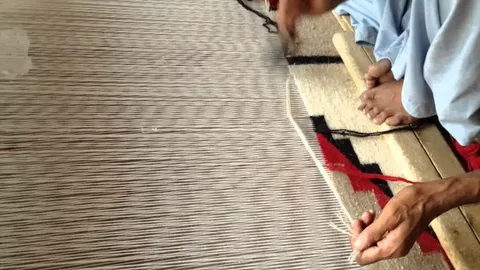
In places like Bhadohi, where The Ambiente has its roots, this tradition goes back centuries. A single rug can take months to complete. Weavers sit at a vertical loom and tie individual knots of yarn around the warp threads. The density of these knots determines the rug’s quality and the sharpness of the design.
This process results in Handmade Rugs in India that are unique. No two are exactly alike. The slight variations in the weave are the signature of the artisan, proving that a person, not a factory line, created the piece. This connection to human skill adds a layer of value that goes beyond simple aesthetics. It grounds your home in tradition and authenticity.
Supporting Artisans is an Ethical Choice
Sustainability is not just about the environment; it is also about people. The textile industry often hides unfair labor practices behind low prices. When you choose a hand-knotted rug, you often support a decentralized, cottage-based industry that keeps rural communities alive.
The Ambiente works with over 4,000 women weavers. These artisans work in their own environments, preserving a craft passed down through families. This model provides sustainable livelihoods and financial independence for women in rural India.
When you buy a rug made this way, your money supports fair wages and ethical working conditions. You vote for a system that values the worker as much as the product. It turns a simple purchase into a meaningful act of support for global artisan communities.
How to Style Hand Knotted Rugs in Your Home
You might think traditional rugs only fit in classic homes, but that is not the case. The quality and texture of hand-knotted rugs make them versatile enough for any interior style, from modern minimalism to bohemian chic.
Here is how to make them work in your space:
Anchor the Living Room
In a large living room, the rug acts as the foundation. Choose a large wool rug with a higher knot count. Wool creates a cozy atmosphere and handles high foot traffic easily. Place the front legs of your sofa and chairs on the rug to tie the seating area together.
Add Warmth to the Bedroom
Your bedroom needs comfort. A rug with a silk blend adds a soft, luxurious feel underfoot. Since bedrooms have less foot traffic, you can opt for more delicate materials or intricate patterns without worrying about wear and tear.
Define Open Spaces
If you have an open-concept floor plan, use rugs to define different zones. A vibrant, patterned rug can designate the dining area, while a neutral, textured rug can define the living space. This visual separation organizes the room without the need for walls.
Layer for Depth
Do not be afraid to layer. A small, colorful hand-knotted rug looks fantastic on top of a larger, neutral jute or sisal rug. This adds depth and allows you to use a vintage or higher-end piece that might be too small to fill the room on its own.
What to Look For When You Buy Rugs
Searching for the perfect rug can feel overwhelming. The market is flooded with options that look similar in photos but perform very differently in real life. When you get ready to buy rugs, keep these factors in mind to ensure you get authentic quality.
Check the Back
Flip the rug over. On a hand-knotted rug, the pattern on the back should look like a mirror image of the front. You should see the individual knots. If the back is covered with a canvas or mesh backing, it is likely a tufted rug held together with glue, not a hand-knotted one.
Examine the Material
Ask about the fiber content. High-quality rugs use premium wool (like New Zealand wool) or real silk. Be wary of “art silk” or “bamboo silk,” which are often just fancy names for viscose. Viscose looks great initially but stains easily and wears out fast.
Count the Knots
Knot density matters. Generally, a higher knot count indicates a more durable and detailed rug. However, a lower knot count can still offer great quality for simpler, bolder geometric designs.
Trust the Source
Buy from brands that are transparent about their production. The Ambiente, for example, is backed by 30 years of expertise through its parent company, Bhadohi Carpets. We control the process from dyeing the yarn to the final wash, ensuring ethical production and premium quality.
Make a Conscious Choice for Your Home
Your home reflects your values. Choosing a hand-knotted rug is a powerful way to state that you value quality over quantity, longevity over disposability, and skilled craftsmanship over mass production.
These rugs do more than cover a floor. They tell a story of heritage, support sustainable livelihoods, and keep synthetic waste out of our ecosystem.
If you are ready to find a piece that aligns with these values, look at what The Ambiente offers. Our collection brings the rich legacy of Bhadohi craftsmanship directly to your modern home. Make your next decor decision one that you—and the planet—can feel good about.
