

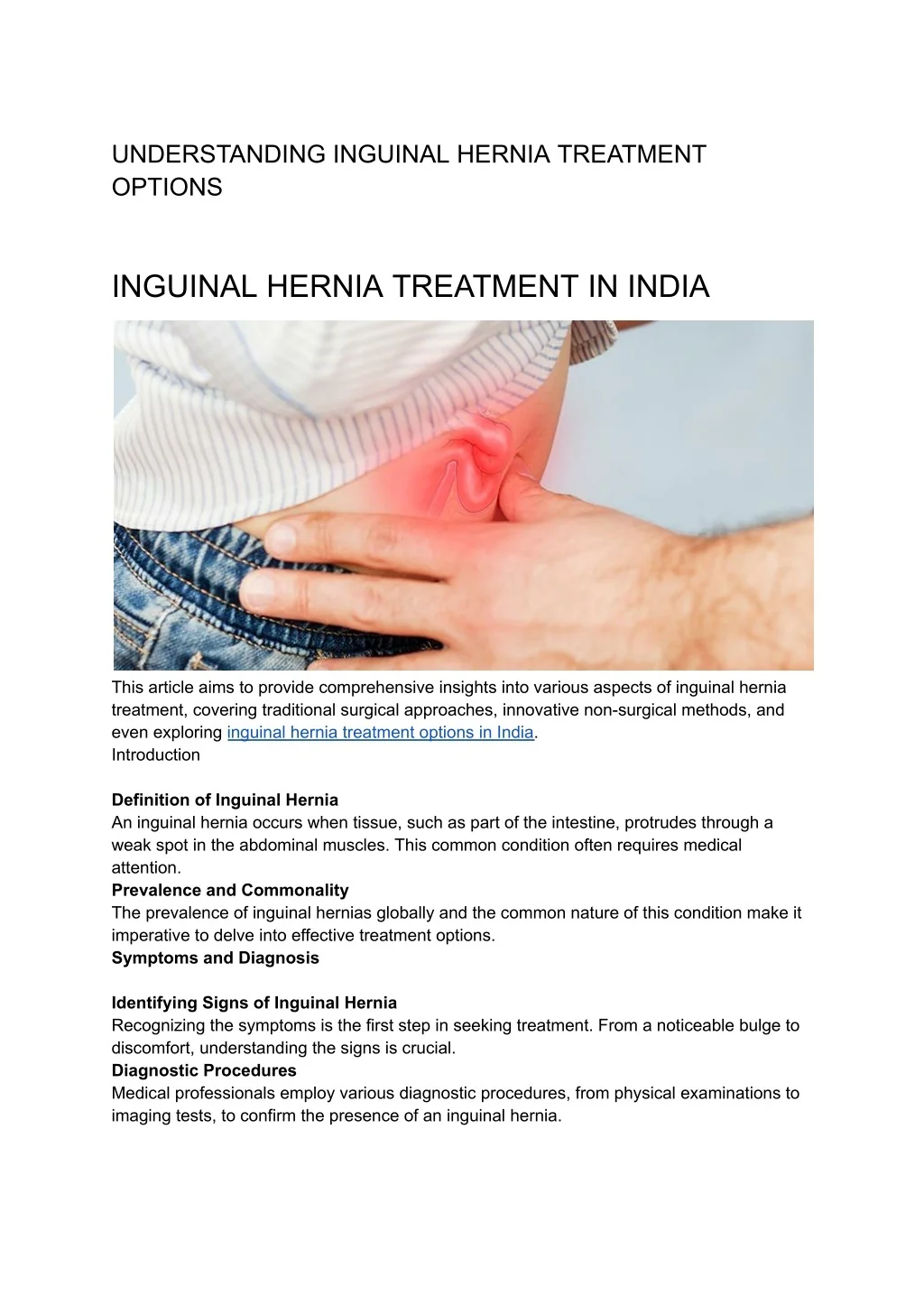
Hernias are a common medical condition that occurs when an internal organ or tissue pushes through a weak spot in the surrounding muscle or connective tissue. While the term “hernia” may seem straightforward, the treatment approach can vary significantly depending on the type of hernia. Understanding these differences is essential for effective management and recovery.
Understanding the Types of Hernias
Before exploring treatment options, it’s important to know that hernias can occur in different areas of the body. The most common types include:
- Inguinal Hernia: Occurs in the groin area and is more common in men.
- Hiatal Hernia: Happens when part of the stomach pushes up into the chest cavity through the diaphragm.
- Umbilical Hernia: Appears near the belly button and is more frequent in infants and obese adults.
- Incisional Hernia: Develops at the site of a previous surgical incision.
- Femoral Hernia: Occurs just below the groin, more common in women.
Each type presents unique symptoms and complications, which directly influence the treatment approach.
How Hernia Treatment Differs Between Types of Hernias
The treatment for hernias is not a one-size-fits-all solution. Here’s how hernia treatment differs between types of hernias:
Inguinal and Femoral Hernias
For inguinal and femoral hernias, surgical repair is often recommended, especially if the hernia is causing pain or complications. There are two main surgical approaches:
- Open Surgery: The surgeon makes an incision to push the protruding tissue back into place and reinforce the weakened area with mesh.
- Laparoscopic Surgery: A minimally invasive procedure that uses small incisions and a camera to repair the hernia, often resulting in faster recovery.
Umbilical Hernias
Umbilical hernias in infants may close on their own, but in adults, surgery is usually necessary if the hernia is large or symptomatic. The surgical repair often involves stitching or mesh reinforcement to prevent recurrence.
Hiatal Hernias
Hiatal hernias are typically treated differently than abdominal wall hernias. Lifestyle changes, such as dietary adjustments and medication to reduce stomach acid, are often the first line of treatment. Surgery, such as fundoplication, may be required only if symptoms are severe or complications like gastroesophageal reflux disease (GERD) develop.
Incisional Hernias
Incisional hernias require careful surgical repair because the weakened tissue is often more prone to recurrence. Surgeons usually employ mesh reinforcement and may choose between open or laparoscopic techniques depending on the hernia size and location.
Conclusion
Understanding how hernia treatment differs between types of hernias is crucial for selecting the right approach and achieving optimal recovery. While some hernias may only require lifestyle modifications or monitoring, others demand surgical intervention. Consulting a healthcare professional ensures that the treatment plan is tailored to the hernia type, patient health, and potential risks.
